
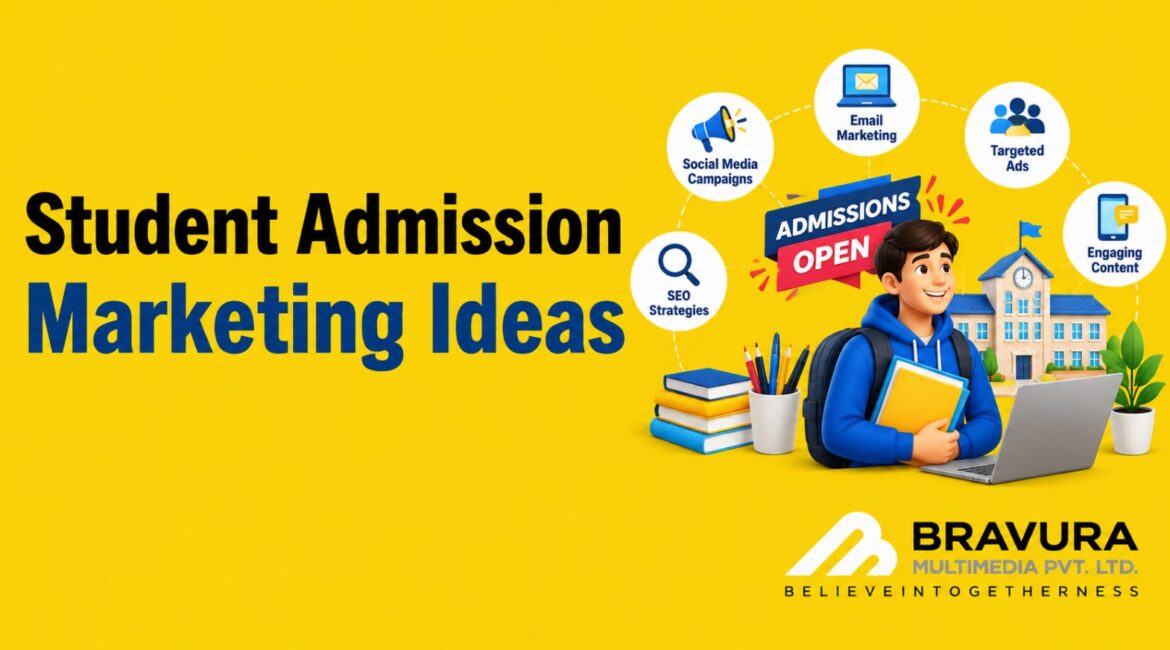
Finding the right students is now a key for schools, colleges, universities, and other educational institutes to sustain future growth. There is a tough competition as many educational providers offer the same facilities and courses and advertising might not be sufficient to target prospective students and their parents. An effective student admission marketing plan can be used by educational institues to increase their awareness, strengthen their image and bring in quality applications.
Through the varied use of digital and traditional channels, whether it is by way of online marketing, content provision or targeted mailings they can appropriately engage with individuals at each point of the admission process.
1. Build a Strong Online Presence
Many customers will use your web page as a selling tool before making an admission decision. Students and parents will do almost 80 percent of their research online.
Courses should be listed with set criteria fees facilities, teachers, and admission procedure and contact information should be provided. Pages with one course each and straight forward enquiry forms will make it easier for the potential students to follow up.
2. Use Social Media Marketing
Social media has contributed to the ability of universities to reach out to future students. For example, universities are able to have a direct communication with students through social media markets such as Instagram, Facebook, YouTube, and LinkedIn (dependent on who the attracting market is).
Institutions can also appear on campus tour, campus activities achievements students introduction events workshop and education. Campus life can be included to make it more interesting via short-form videos.
A cohesive social media presence makes the institution more visible and allows future students to see what differentiates it.
3. Create Student-Focused Content
Content marketing can be a useful tool for student admission marketing. Rather than solely advertising courses, the institution can develop content that responds to questions students typically pose.
Useful topics can include:
· How to choose the right course
· Career opportunities after graduation
· Entrance examination preparation tips
· Scholarship information
· Campus life
· Frequently asked admission questions
· Skills required for specific careers
4. Showcase Student Success Stories
Show what current students/alumni have achieved. Students and parents generally want to know about existing students. Here you can use talk to recent students and success stories and achievements, internships, and placement experiences.
As a valuable benefit, video testimonials enable future students can have a face-to-face listening to the voices from the students and graduates of the institutions. Institutions must provide authentic and sincere stories of their real experience, & transparently explain the background of the accomplishment.
5. Use Search Engine Optimization
SEO is used to get an institution to be seen when potential students are searching for courses, colleges, or admissions on the net.
College and university websites can be optimized for relevant search terms, provide helpful blogs and individual course pages can be enriched. As well as nationally they can capitalize on local SEO and reach students for whom they are an educational choice in a particular city or location.
In general it is an effective where the long-term goals are concerned and that the individual institution would be best served by focusing on producing relevant and accurate content rather than relying solely on the number of keywords.
6. Run Targeted Digital Advertising
Paid advertising can support institutions in attracting specific segments of prospective students. Search engine advertising can attract those who are interested in searching about courses and admission updates, and social media advertising can support institutions target geographically and interest based audiences.
There should be a goal to every campaign. For example, acquiring an enquiry, running an open house or gaining an application. Landing pages must also contain useful information and be easily accessible for students to complete an enquiry.
7. Organize Open Houses and Campus Events
While the Internet can reach audiences and grab their attention, the chance to personally connect can be advantageous for students to develop a deeper understanding of the university. Open houses, career, and educational counseling sessions, workshops, and campus tours are opportunities to connect with faculty members and learn more about where they will be studying.
These also provide more opportunities to address questions for courses, admissions, facilities, and support.
8. Use Email and WhatsApp Communication
After a student has submitted an enquiry communication will be an important aspect. Institutions could through email or WhatsApp to communicate the admission updates, application deadlines, invitations to the events and relevant course information.
The communication should be valuable, well-timed, and not overwhelming with too many promotional emails.
9. Strengthen Your Admission Enquiry Process
Coming up with enquiries is just one aspect of student admission marketing. There should also be an efficient system in place for the reception of the potential students.
Enquiry forms, CRM systems, following-up schedules and well-informed admission counsellor can help to answer questions quickly. Institutions can keep track of enquiries to determine, which marketing resources are appealing to prospective students.
10. Measure Marketing Performance
Institutions should monitor the effectiveness of their admissions campaigns on a regular basis. This might include levels of visitor traffic to institutional websites, enquiry levels, cost per enquiry, number of event registration and applications from various channels.
Assessment of all of these measures allows institutions to understand what practices are currently working for engagement, and where adjustments need to be made.
Conclusion:
A successful student recruitment marketing effort improves student awareness, informs them well, enables communication and offers an easy-to-understand, efficient admission process. An effective combination of the website, social media, search engine marketing, digital advertising, student stories, campus visits and organized follow-up will give you the opportunity to attract prospective students from the very first to the last step of the recruitment funnel.
Instead of a single one, educational institute can adopt an integrated promotion strategy based on the target customers, courses, and the final admission aim. Developing a systematic promotion strategy through regular review, analyzing the effectiveness of promotion channels, colleges can achieve improvement over a period of time.
